Piet Mondrian (1872, Amersfoort – 1944, New York) — Dutch painter and co-founder of De Stijl. Mondrian evolved from a landscape painter into the most radical abstract artist of his time. His compositions of black lines and planes of red, yellow and blue are among the best-known images of the twentieth century and have found their way into fashion, design and architecture. At Pop Art Statues you'll find Mondrian products such as a vase, coasters, a paperweight, mugs and a kokeshi doll.
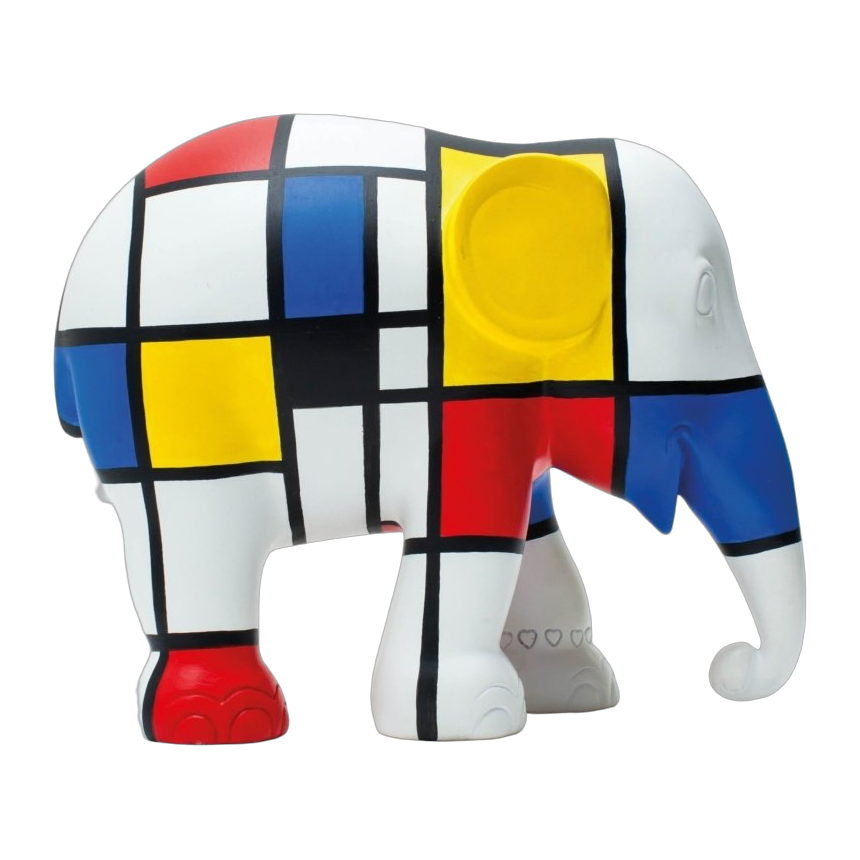
The use of black lines and coloured rectangles creates a sense of balance and harmony. The primary colours red, blue and yellow are arranged in a way that suggests movement and energy. Art without representation. Mondriaan crossed my mind. And the back of this elephant.
Composition with large red plane, yellow, black, grey and blue (1921) This composition is one of the principal works of what Mondrian referred to as Neoplasticism. In 1920, Mondrian published ‘Le Néo-plasticisme’, a booklet in which he attempted to provide further theoretic grounding for his ideas. He elaborated on his prior publications in the renowned…
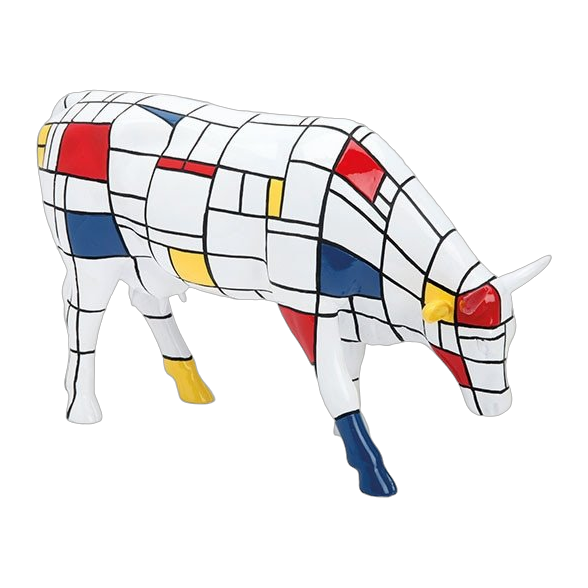
Inspiring art influences people all over the world. The same goes for this cow. An homage to Piet Mondriaan. The Moondriaan by artist Jon Eastman during the event in New York 2000.
The Piet Kokeshi is a tribute to the iconic Dutch painter and one of the pioneers of abstract art. The Piet Kokeshi doll has a sleek and modern design with a bold composition of colorful squares and rectangles, all inspired by his signature style. This kokeshi serves as a tribute to Piet’s special legacy and…
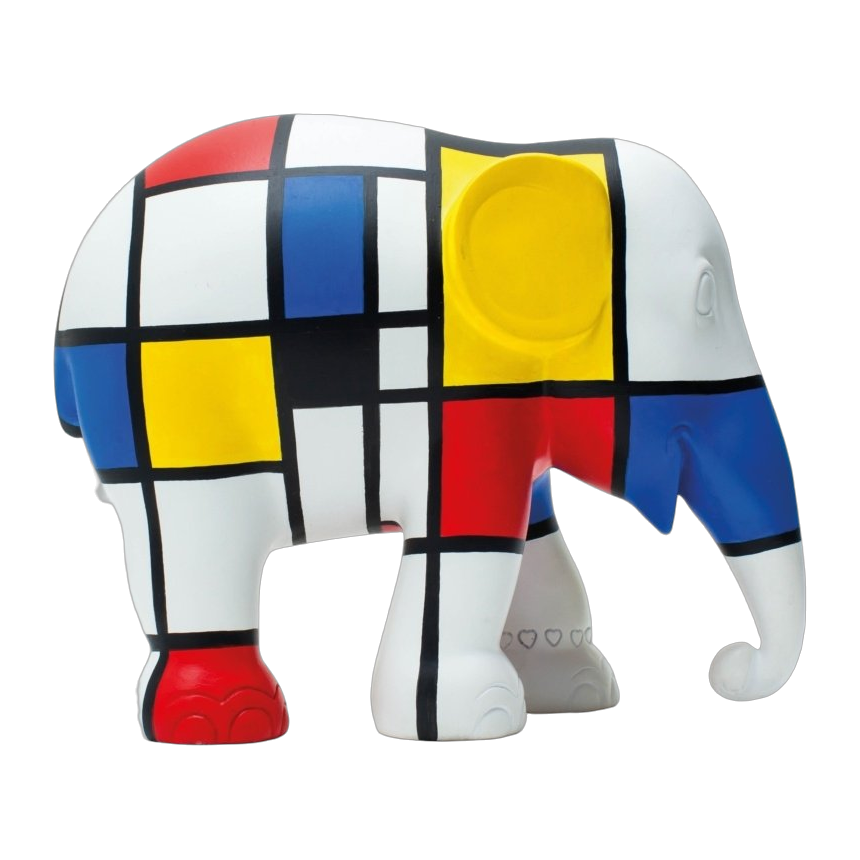
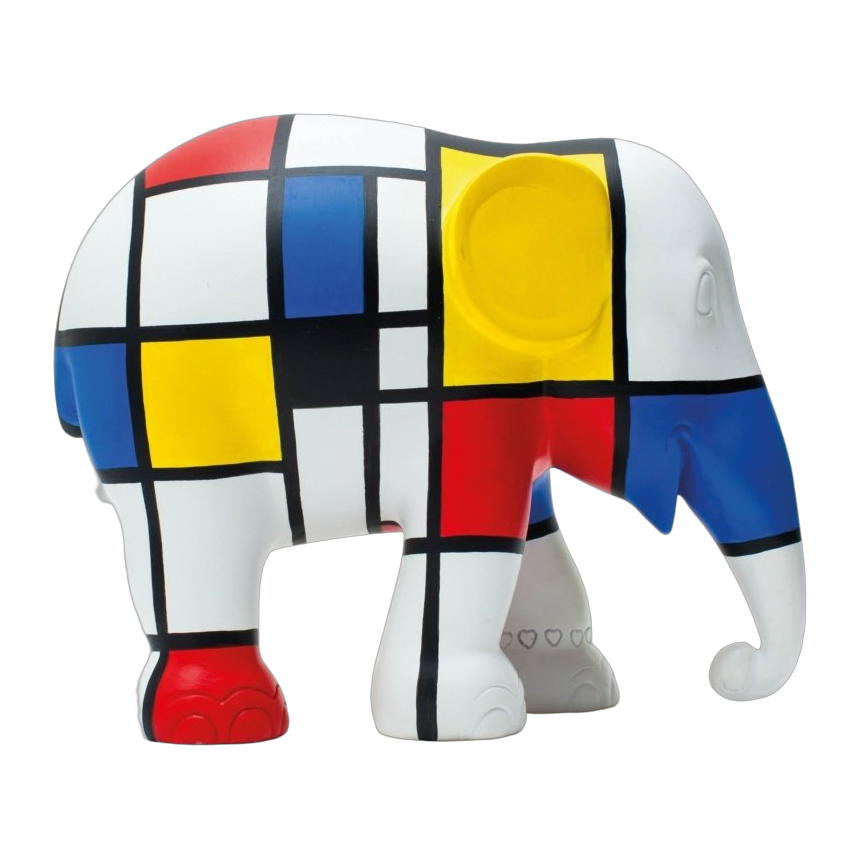
Artist: Nipon KeawkandeeParade: Bangkok 2015 All elephants are made of a high-quality synthetic resin.They are hand-painted in the studio in Thailand.All elephants come with a certificate and are numbered in a limited edition.They are packed in a nice gift box.
Artist: Nipon KeawkandeeParade: Bangkok 2015 All elephants are made of a high-quality synthetic resin.They are hand-painted in the studio in Thailand.All elephants come with a certificate and are numbered in a limited edition.They are packed in a nice gift box.
Piet Mondrian is considered the founder of modern art and his abstract paintings have been a popular source of inspiration for fashion, furniture, jewelry and now elephants!
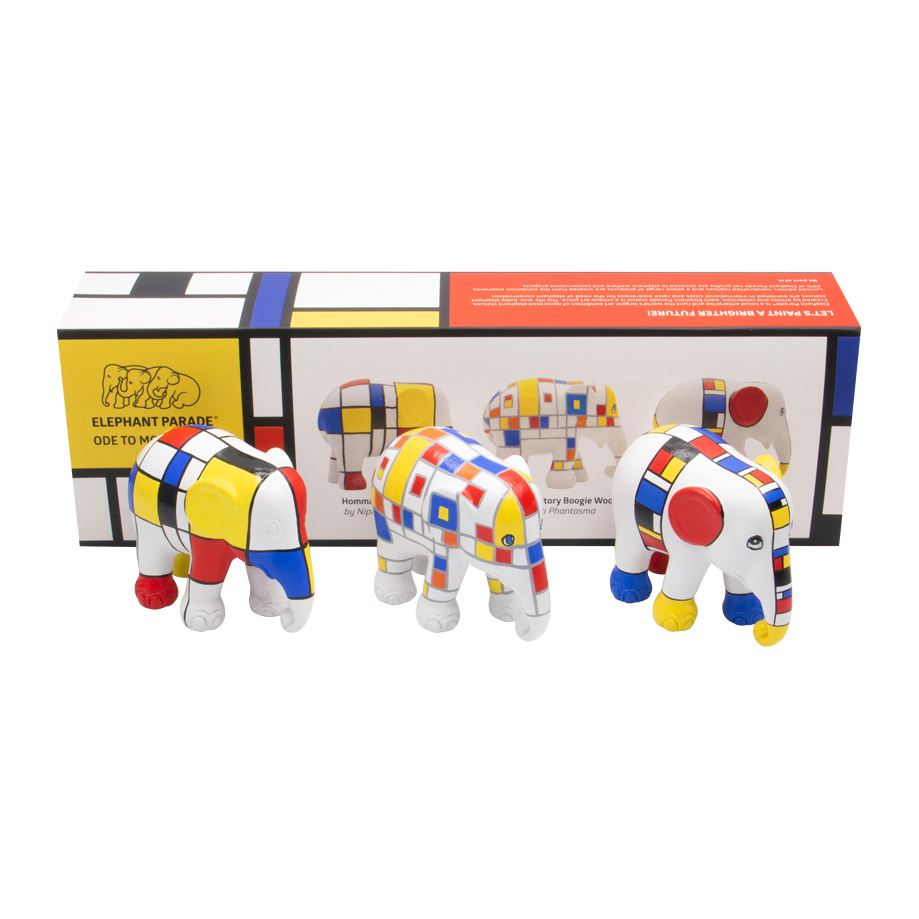
Elephant name: Multipack Ode to Mondriaan Artist: Studio Phantasma, Nipon Kaewkumdee, Esther Springer Parade: Europe Herd Experience the spirit of artistic brilliance with our ‘Ode to Mondriaan’ Elephant Figurine Set. Inspired by the iconic Piet Mondriaan, each decorative elephant statue pays homage to modern art. Meticulously crafted, these small elephant figurines blend traditional symbolism with…
This nice series of Molly’s and Dolly’s are hand-painted after van Gogh, Miro, Pollock, Picasso and Mondriaan. Available in 20 and 25 cm high.Height including base: 20 cm
Pieter Cornelis Mondriaan was born on 7 March 1872 in Amersfoort, the Netherlands. He trained at the Rijksakademie in Amsterdam and at first painted landscapes, windmills and farms in the tradition of the Hague School. Around 1908 his work changed: in Domburg his colours became bolder, and in his series of trees you can watch the subject disappear step by step, from The Red Tree (1908) to the almost abstract Flowering Apple Tree (1912).
In 1911 Mondrian moved to Paris, where he encountered Cubism and changed the spelling of his name from Mondriaan to Mondrian. During the First World War he was stuck in the Netherlands. In 1917 he founded the magazine De Stijl with Theo van Doesburg, in which he described his Neo-Plasticism: art reduced to horizontal and vertical lines and the primary colours. In 1938 he moved to London and in 1940 to New York, where the rhythm of the city and jazz inspired him to paint Broadway Boogie Woogie. He died in New York on 1 February 1944. His last work, Victory Boogie Woogie, remained unfinished.
How to recognise Mondrian's style
Piet Mondrian's later work can be recognised by a few constant features:
Only horizontal and vertical: Mondrian used nothing but straight lines at right angles. He rejected diagonals; in 1924 he even fell out with Theo van Doesburg over their use.
Primary colours: Red, yellow and blue, complemented by the non-colours white, black and grey. With this limited palette he searched for balance and harmony.
Asymmetrical balance: His compositions are never symmetrical. A large white plane balances a small red one; the work looks simple, but every line is carefully placed.
Rhythm in the late work: In New York he let go of the black lines. In Broadway Boogie Woogie the lines are made of small coloured blocks, like the traffic and music of the city.
Where Claude Monet captured light and nature, Mondrian reduced the landscape to line and plane. With Gustav Klimt he shares a love of pattern and decoration, but in strict, geometric form. Salvador Dalí is his opposite: dream images instead of pure abstraction.
Mondrian collection at Pop Art Statues
At Pop Art Statues you'll find a changing collection of Mondrian products, available from €9.50. Think of a vase and coasters with his famous compositions, a glass paperweight by QB-art, mugs in a gift box, an espresso set and a magnet. Artists from Elephant Parade, among others, also pay tribute to Mondrian, for example with the elephant Hommage to Mondriaan.
Who is Mondrian a good gift for?
Mondrian products suit anyone who loves clean design, bright colours and Dutch art. His compositions are instantly recognisable, even for people who are not art connoisseurs. A mug or a set of coasters is an accessible gift or extra present; the vase is an eye-catching piece for the home. Mondrian is also a great gift for someone who has visited the Kunstmuseum Den Haag or the Mondriaanhuis in Amersfoort, or for a lover of architecture and graphic design.
The products fit well in a modern, minimalist or Scandinavian interior, where the primary colours add a cheerful accent.
Less suitable for those who prefer soft, romantic or floral motifs. Mondrian's bright colours and hard lines call for an interior that can handle that boldness.
Mondrian is the founder of Neo-Plasticism and one of the founders of De Stijl. His best-known work consists of black horizontal and vertical lines with planes of red, yellow, blue and white. Before that he painted landscapes and went through a Cubist period.
Are the Mondrian products at Pop Art Statues officially licensed?
They are decorative and practical objects featuring Mondrian's compositions, not replicas of his paintings. Mondrian died in 1944; since 2015 his work has been in the public domain in Europe.
Where can you see Mondrian's work?
The world's largest Mondrian collection is in the Kunstmuseum Den Haag, including Victory Boogie Woogie. His birthplace in Amersfoort is now the Mondriaanhuis. Broadway Boogie Woogie hangs in the Museum of Modern Art in New York.
How much do Mondrian products at Pop Art Statues cost?
Prices start at around €9.50 for a magnet and around €10 for a mug. Coasters, the paperweight and the espresso set fall in between; the vase is the largest piece. Check the product pages for current prices.
How do I care for Mondrian products?
Clean ceramics, such as mugs and the vase, with a soft, slightly damp cloth or by hand. Clean a glass paperweight with a dry microfibre cloth. Do not use abrasive products, so the colours stay bright.